Saturday, September 29, 2018

レナード・N・スターン・スクール・オブ・ビジネス MBA Class of 2020

The Class of 2020 is decidedly smaller than its predecessors. 
  • During the 2017-2018 cycle, the school lured 375 students, down from the 399 who comprise the 2019 Class. 
  • There were 150 fewer applications, a number that’s coupled with a 2% uptick in acceptance rate to 23%.
  • The average GMAT was  717 GMAT – up four points (the school’s best number since the 2016 Class). 
  • The undergraduate GPA also remained relatively steady, slipping by a negligible .03 of a point. 
  • The percentage of women slipped by three points
  • There was a two-point gain with the percentage of international students. 
  • The number of international students at Stern has jumped by eight percentage points over the past three classes, a tribute to the increasingly-cosmopolitan nature of the program.
  • Last year, business majors accounted for 36% of the class. This year, that number was sliced to 29%. 
  • The humanities and social sciences, which jumped a combined 4% (with humanities comprising 17% of the class and social sciences another 16%). Similarly, STEM majors climbed three points to 20%, with economics holding steady at 18%.
  • Overall, Stern drew the largest percentage of students from the financial services sector. At 26%, finance professionals double their nearest bloc – consultants – which come in a 13%. 
  • No profession makes up 10% of the class with the biggest blocs including technology (9%), entertainment and media (7%), military and government (7%), and consumer products (6%).


Tuesday, September 25, 2018

ハース・スクール・オブ・ビジネス MBA Applications DOWN 7.5%

UC-Berkeley Haas School of Business
UC-Berkeley’s Haas School of Business MBA applications for the Class of 2020 slipped by 7.5% to 3,821 from 4,132 a year earlier. The decline lifted the school’s ultra-low acceptance rate slightly from 12% last year.
  • But the average class GMAT score increased one point to 726, up from 725 a year earlier.
  • In the past five years, the school has increased its average GMAT by 12 points from
  • The middle 80% range of GMAT scores for its newest class went from a low of 690 to a high of 750.
  • The average GRE score for the Class of 2020 was 165 for the verbal, with an 80% middle range of 160 to 169 and a 164 for the quant with an 80% middle range of 160 to 170. 
This is the first time Haas published GRE data, largely because, also for the first time, more than 10% of the incoming class submitted a GRE in their applications.

Other schools also saw declines
  • Chicago Booth saw an 8.2% decline
  • Harvard Business School experienced a drop of 4.5%
  • Wharton was down by 6.7%. 

INTERNATIONAL APPLICANTS DOWN AT MOST U.S. SCHOOLS
Most of the declines are in applications from non-U.S. candidates who are have been turned off by anti-immigration talk and concerns over getting student and work visas in the U.S. Some U.S. MBA programs have had double-digit drops in year-over-year applications.
  • At Duke University’s Fuqua School of Business, for example, this year’s international student percentage is 29% based solely on international citizenship. 
  • Haas reports that its newest class is composed of 42% international passport holders from 39 countries.


LARGEST INCOMING CLASS EVER AT HAAS
  • Haas enrolled a class of 291 students this year, its largest incoming class ever, up from last year’s record of 284, with 43% women, up from 39% last year. 
  • 38% of the class is composed of U.S. minorities. 
  • The average undergraduate GPA was 3.66, down from 3.71 last year, with a middle 80% range of 3.41 to 3.90. 
  • Students have an average of 5.4 years of work experience, with the mid-80% range of 3.3 to 8.0.

The most popular undergraduate majors in this year’s Haas class? Economics tops the list, accounting for 21% of the class, followed by engineering at 16% and social sciences at 14%. Students who had majored in business or commerce total 11%, exactly the same percentage as those who majored in finance. Humanities majors make up 7% of the class, natural sciences 3% and math 3%.
CONSULTING INDUSTRY BACKGROUNDS ACCOUNT FOR 24% OF THE CLASS OF 2020
Consulting was the most common path to Haas this year, accounting for nearly one in four of the new students at 24% of the class. Banking and finance was next with 20%, while technology was third with 10% (see chart below). Nonprofit students represent 8% of the Class of 2020, while healthcare supplied 7%, energy 5%, and consumer packaged goods and retail 5%.
Source: UC-Berkeley Class Profile for Class of 2020
BY FUNCTION, 29% OF THE CLASS HAD A CONSULTING ROLE BEFORE COMING TO HAAS
Haas also published data in its class profile on the functions MBA students worked in before starting at Haas. Consulting also topped the list at 29%, more than twice as many students as finance which accounted for 12% of the class (see chart below).
Source: UC-Berkeley Class Profile for Class of 2020

Tuesday, September 18, 2018

MITスローン・スクール・オブ・マネジメント GMAT Reaches 728

MIT Sloan students in class. Courtesy photo. Learn about the MBA M7
MIT Sloan students in class. Courtesy photo
MIT’s Sloan School of Management enrolled a class of MBAs this fall with the highest average GMAT scores in history, a six-point jump in the Class of 2020 average to 728 from 722 last year. On some level, the new average allows Sloan to catch up with some of its peer schools. At Columbia Business School, the latest entering class average GMAT soared eight points to 732 this year–the average at both Northwestern University’s Kellogg School of Management and the University of Pennsylvania’s Wharton School.
MIT’s median GMAT score of 730, reflecting a ten-point rise from last year, now equals that of its cross-town rival Harvard Business School. MIT Sloan did not release the full range of GMAT scores for its 409 enrolled MBA students but did publish the middle 80% which is 700 to 760, scores that would likely discourage applicants with sub-700 numbers from applying to Sloan. At HBS this year, GMATs range from a low of 610 to a perfect score of 800, while at Kellogg they range from a bottom score of 590, topping out at 790.
Unlike an increasing number of schools–HBS, Stanford, Wharton, Yale–MIT Sloan chose not to publicize its average GRE numbers in releasing its newest class profile. Sloan does provide GRE ranges for the middle 80% of accepted students who took the GRE. Sloan reported that the 80% quant range was between 158 and 169, while the verbal fell between 154 and 169.

Ironically, international enrollment went up to 38% from 36% at a time when many school are reporting a decline in non-U.S. applicants and students. Women make up 42% of the newest Sloanies, exactly the same percentage as last year. Sloan said the new class hails from 49 countries. Class of 2020 students arrived at Sloan with an average 4.9 years of work experience.
31% OF THE CLASS MAJORED IN ENGINEERING AS UNDERGRADS
The school did not report on its application volume in the class profile. A year ago, Sloan received 5,798 applications, a slight rise of 91 more applicants, an applicant pool that led to last year’s 404-member class.
As is typical of MIT Sloan, engineers make up the largest undergraduate major (31% of the entering class) Economics (21%) and business (20%) are in second and third place. Humanities and social science majors represent only 14% of the entering class. In contrast, they make up 44% of Stanford’s entering MBA students.
When it comes to pre-MBA work experience, some 21% of the class is composed of consultants, with 19% from financial services and 18% from technology, media, and telecom. Another 14% had racked up their work experience in either the government or public sector, while 8% bring a background in industrials and 7% in the energy industry. Students with resumes that show they worked in the healthcare and life sciences fields account for 6% of the class, consumer goods and services 5%, and professional services 2%.

CORE COURSES COMPLETE AFTER FIRST SEMESTER
One of Sloan’s biggest advantages is its curriculum. To call it “flexible” would be an understatement. For one, the core courses last just one semester. In other words, students can spend the second semester pursuing their passions and doctoring their deficiencies through electives. Between Sloan’s exacting academics and hands-on opportunities, students can gain a subject level mastery and industry-based experience that provides a huge head start before they even start their internship. Such flexibility is complemented by the Sloan Innovation Period (SIP), a week-long break between the quarters where students can make global or industry treks or participate in intensive workshops on topics like strengthening leadership or delivering a TED Talk.
Such wrinkles appeal to a different type of student – one who is heavily in demand by employers. According to U.S. News’ 2017 survey of business school administrators, Sloan ranks as the top program in bread-and-butter specializations of information systems and operations according to business school administrators. At the same time, it places among the top schools for logistics, entrepreneurship, and finance. Not surprisingly, Sloan grads earn some of the heftiest paychecks starting out, including a $145,826 average for the Class of 2016.
Such outputs are the result of high satisfaction results among employers. In fact, Sloan earned the second-highest marks in Bloomberg Businessweek’s annual recruiter survey in 2016, which Dean Schmittlein attributes to their graduates’ penchant for impact and selflessness. “’Your graduates simply go farther, faster, in our firm than the graduates of other schools.’  That is what I hear most – from the firms that track such things.  Our graduates do more to move the whole organization forward (not just moving themselves forward), and that keeps them coming back.”

Friday, September 14, 2018

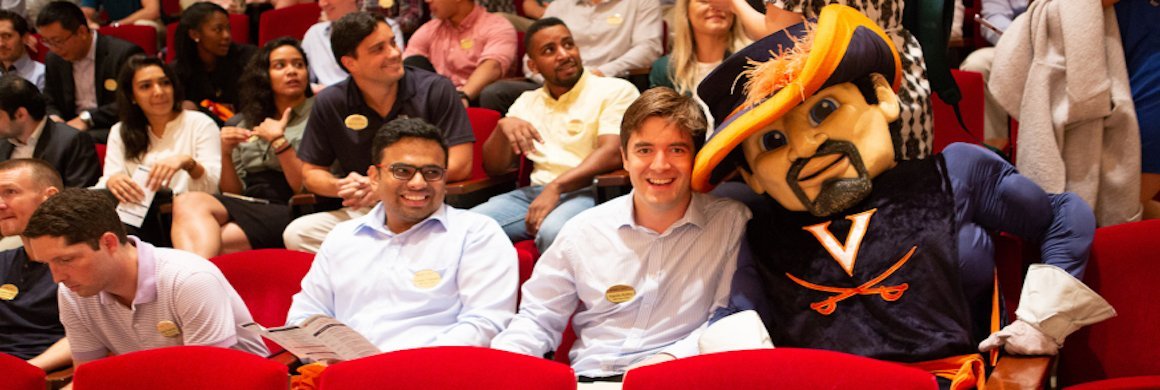
ダーデン・スクール・オブ・ビジネス Class of 2020

Like many of its peer schools, the University of Virginia’s Darden School of Business MBA Class of 2020. 
  • 335 
  • Record average GMAT score of 718
  • International students  29 percent of the entering class, down from 34 percent a year earlier. 
  • The incoming class represents 36 different countries, on par with the Class of 2019.

マクドノー・スクール・オブ・ビジネス Applications Fall 16.2 Percent

Image result for georgetown mcdonough campus

Georgetown McDonough’s full-time and evening MBA Class of 2020 ranks as one of the most “academically qualified and professionally experienced” in the school’s history.  
  • At 693, the average GMAT score for the full-time MBA class set a new school record, while the median of 700 “holds steady from previous years.” 
  • The average work experience is up 0.23 years from 5.36 to 5.59 years. 
  • International students in the full-time MBA Class of 2020 come from 37 countries. 
  • Total applications (1,459) represent a 16.2 percent drop year over yea

フュークア・スクール・オブ・ビジネス Class of 2020

fuqua mba class of 2020
As the MBA Class of 2020
  • The top three industries pursued by graduates of the Class of 2017, the most recent class for which employment data has been published, were consulting (33 percent), finance (25 percent), and general management (20 percent).
  • Of the 440 incoming students, 42 percent are women, an 8 percent increase over the Class of 2019. 
  • Incoming students come from 19 different fields. Unlike the Class of 2019, consulting makes up the largest sector of incoming students, accounting for 24 percent of the Class of 2020. 
  • Students with financial services work experience make up 22 percent of the class, a 2 percentage point decrease over last year, when they outnumbered all others.
  • Other popular pre-MBA fields include hospital/healthcare/health services (7 percent), information technology (5 percent), nonprofit/education/special organization (5 percent), and energy/chemical/gas (5 percent).

Fuqua offers students the ability to tailor the curriculum to suit their individual professional needs. Students are only required to take 13 core courses, all but one of which are completed in the first year.
This allows students to get into their specialized work more quickly. When they get to this point, students at Fuqua can choose from 14 different concentrations and more than 100 electives. This is in addition to the various opportunities that students are provided to study abroad, gaining extra knowledge that can make them more marketable after graduation.