Thursday, May 9, 2019

MBA Admissions Brief: ウォートン・スクール


Maryellen Reilly, Deputy Vice Dean of the Wharton MBA Program
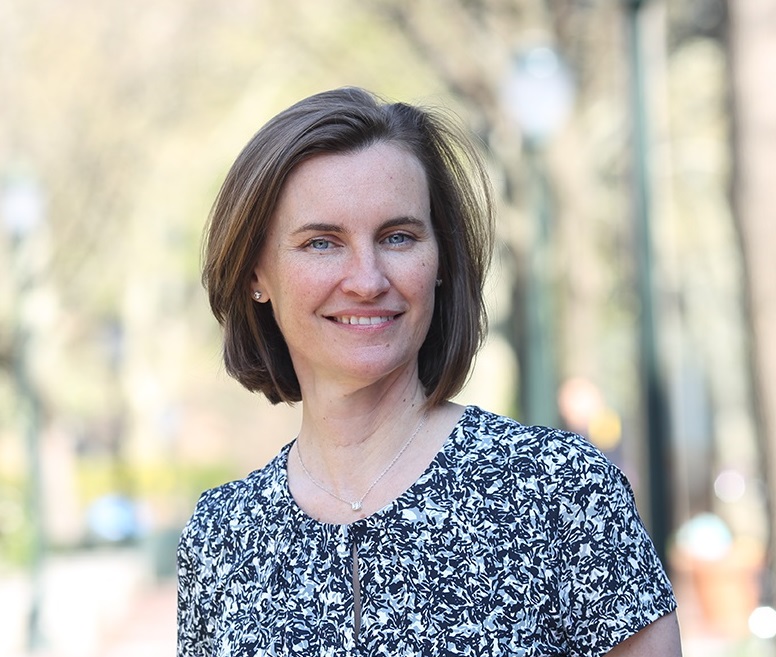
 Before coming to Wharton 12 years ago, Maryellen spent over 15 years in finance in both the US and Europe at firms including Capital Group and JP Morgan. Additionally, Maryellen sits on the investment committee of the Girl Scouts of Eastern Pennsylvania, and is a member of the Forum of Executive Women.
In her role as Deputy Vice Dean, Maryellen leads the student experience outside the classroom, including Career Management, Admissions & Financial Aid and Student Life in identifying and providing services and support to enhance the student experience from admission to graduation and beyond.
Read on for her advice about the Wharton application process, choosing recommenders and what you may have to look forward to at Wharton!
What would you say to someone who’s applying next fall and just getting started in the MBA application process now?
Start by thinking deeply about what your goals are and what do you hope to gain from an MBA, both professionally and personally. That’s a big part of the decision process: getting to know yourself. Once you know what you want and what you hope to get out of business school, then you can then set your sights on researching programs and finding the place that best fits you. Every school is really excited to show you everything we offer, but it’s important that you really take this opportunity to see if the school you’re thinking of is the place for you.
What’s the one thing MBA candidates should know about selecting a recommender?
We work well in stories, so it’s best to make sure you find a recommender that can speak to your experiences and what you’ve accomplished over your career. For us, it’s about the quality of the recommendation, not the title of the person who wrote it. The recommendation helps provide a window into your candidacy. We always suggest that as candidates make the request, they use the opportunity to prepare their recommenders with their career highlights, why they are interested in the program and, just as importantly, give the recommender enough time to prepare what they plan to write.

What’s your program’s most exciting change, development or event coming up in the year ahead?
What’s most exciting from a curricular perspective is the personalization we’re providing our students. Wharton focuses on providing a curriculum tailored to the individual and making the experience one that, whatever a student’s aspirations are, will provide them the tools they need to develop.
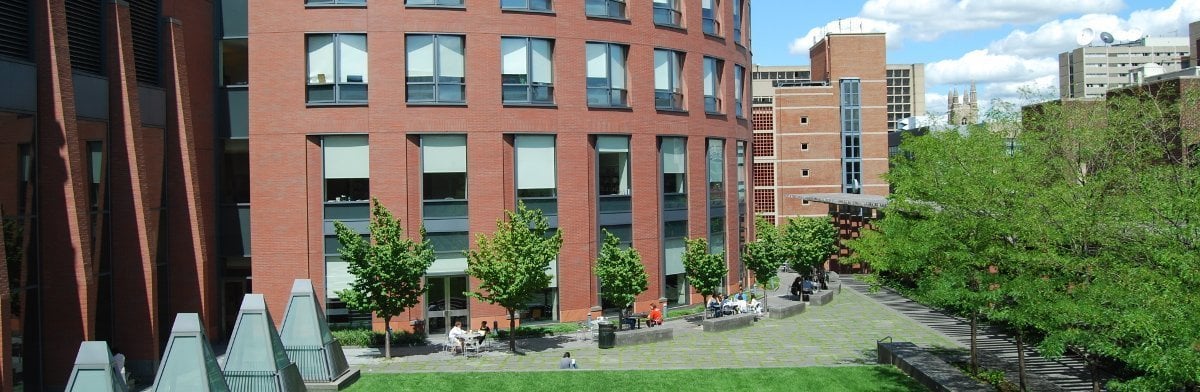
MBA Admissions Brief WhartonOne way we bring personalization into the program is by leveraging student input and data to advise on coursework and programs to help students maximizing learning and achieve their goals. This is done through the Advising Support Network (ASN). The ASN is a group of four advisors assigned to every student during pre-term. It’s a student’s personal “board of directors,” and includes advisors from student life, career management, academics, and leadership. These four advisors help guide each student on their MBA journey, helping them to construct their individual program, connecting them to resources, and providing individual advising sessions.

Of the big trends in business education right now (tech, globalization, analytics), what are you doing or innovating in one (or all) of these spaces?
The biggest trend seems to be around specialization, and Wharton is really leading the charge with the amount of personalization a student can expect in our program. We’re one of few MBA programs that offer majors. A student can come to Wharton and not only get the fundamental management and business education they need, but they can also explore other areas of interest and drill deep into a particular area of knowledge. Because we offer majors, there’s also a distinct opportunity for international students to come to Wharton and obtain a STEM OPT extension by focusing their students in one of 6 majors here: Actuarial science; business analytics; business economics and public policy; business, energy, environment and sustainability; operations, information and decisions; and statistics. Students will gain the tools they need to be adaptable in business, to expand their knowledge area, and to learn from an interdisciplinary lens.

What would you like to highlight about your post-MBA career placement success?
One thing that really stands out about our graduates in terms of their post-MBA paths is the diversity of industries, companies, and roles they go into. For example, the Class of 2019, 36.9 percent of students that reported accepting an offer went into financial services. Within that sphere, there is a wide array of industries that our graduates have gone into, including 11.4 percent in private equity and 6.7 percent into investment management roles. Beyond finance, 14.9 percent of those reporting accepting an offer did so in technology which continues to be a strong area of student interest and placement for our students. Over 30 students graduating in the Class of 2019 plan to start their own business, which speaks to our students’ entrepreneurial spirit.
One statistic that shows not only the impact of the Wharton experience but also the ambition and drive of our students is that many of them are switching industries or functions post-Wharton. In the Class of 2019, 54.3 percent of graduates reported changing their industry or job function. This really shows diversity not only in where students go in their careers, but where they came from and how Wharton has been the bridge between those two places.

MBA Admissions Brief: ハーバード・ビジネス・スクール

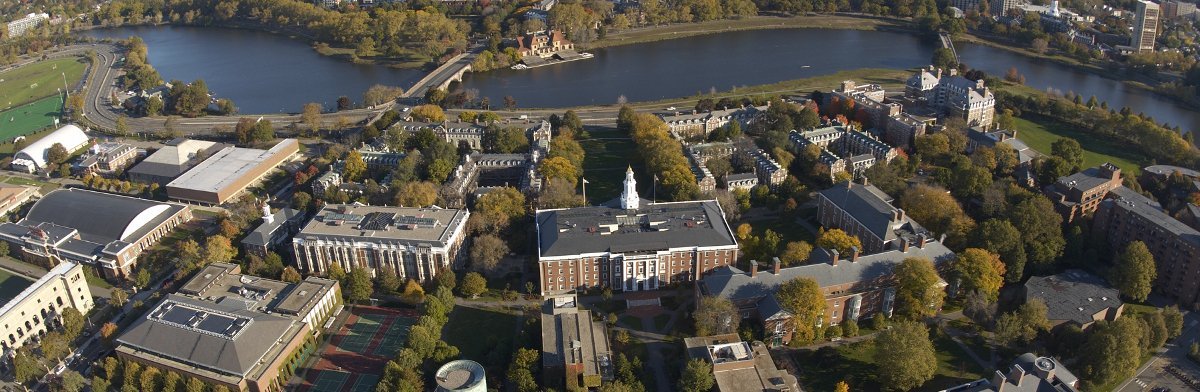
HBS Managing Director of Admissions and Financial Aid Chad Losee

Over the past three years heading up admissions at HBS, he’s helped shaped the exceptional classes, overseen a shift to two admissions rounds, welcomed an inaugural cohort of MS/MBA students and taken the time to talk about interviews, financial aid and more—to mention just a few.
Read on for Losee’s insights into HBS, their admissions and what actions applicants can start taking now.

What would you say to someone who’s applying next year and just getting started in the MBA application process now?
Invest to learn more about two things:  1) the business schools you are considering and 2) yourself.  First, take time to visit schools virtually or in person. You want to be in an environment in which you can thrive in and out of the classroom. For instance, if you’re considering Harvard Business School (and I hope you are!), if learning by the case method doesn’t resonate with you, other programs might be better. In addition to exploring our website and watching videos on the academics here, you can experience the case method by visiting a class on campus.
Second, take time to invest in the self-reflection journey. What are you good at? How do you want to make a difference? What kind of work do you find meaningful? People who find the application process most rewarding are those who use it as an opportunity to learn about themselves.
As you get into the application itself, share with us what you’ve learned. An authentic, clear voice about where you are on your leadership journey will resonate more than writing about what you think schools want to hear. After completing your application, ask yourself or a close friend or family member, “Could this application also be for someone else?” If so, it probably isn’t personal enough and you likely need to do some more introspection.
It’s important to keep in mind that we consider all the elements of the application to get to know you and never look at just one piece by itself.

What’s the one thing MBA candidates should know about selecting a recommender?
MBA Admissions Brief: Harvard Business SchoolRecommendations matter. Pick two people who know you well, will advocate for you, and can give share specific examples to help us get to know you. 

What’s your program’s most exciting change, development or event coming up in the year ahead?
HBS and the Harvard Paulson School of Engineering and Applied Sciences (SEAS) recently launched a new joint master’s degree MS/MBA that has been very successful in attracting outstanding candidates in his first cohort. The program, which confers an MBA and a Master of Science in Engineering Sciences from SEAS, is completed in four semesters over two years.
Designed to train future founders and leaders of technology ventures, the MS/MBA program will provide a strong foundation in general management, build design skills, and extend students’ understanding of engineering.

Of the big trends in business education right now (tech, globalization, analytics), what are you doing or innovating in one (or all) of these spaces?
HBS continues its efforts to build a deep understanding and expertise in global business practice and innovation around the world. We’re constantly refreshing and expanding our global curriculum – 54 percent of cases produced in FY18 were global – and evolving the list of Field Global Immersion (FGI) locations year-to-year. FGI is a semester-long first-year MBA course that culminates with student teams traveling to global markets around the world, requiring them to develop a new product or service concept for a global partner organization.

Africa is one particular area of focus, a region that is assuming an increasingly vital role in the world economy. This year 246 students will be going to Africa— to Accra, Dar es Salaam and Cape Town specifically – for the FGI course. The school also opened the newest regional office, the Africa Research Center in Johannesburg, South Africa. HBS now has a network of fourteen research centers around the world. The Africa Research Center plays an important role in helping HBS develop and strengthen relationships with business and academic leaders across sub-Saharan Africa, while our Middle East and North Africa (MENA) Research Center based in Istanbul, plays this same role for North African countries.

A new Short Intensive Program (SIP) taught in January 2019 called “Africa Rising: Understanding Business, Entrepreneurship, and the Complexities of a Continent,” also focuses on this region.
HBS supports graduates who want to make a difference in emerging markets with the Global Opportunity Fellowship (GO: Africa), which supplements the income of MBA graduates who go to work in Africa following graduation, designed to bridge the gap between a recipient’s annual salary and $100,000 USD. The goal is to attract top talent to Africa and expand the school’s global impact.

What would you like to highlight about your post-MBA career placement success?
HBS Career Professional Development works individually with students to develop their career vision and identify opportunities that meet students’ unique career goals, resulting in opportunities with over 300 organizations for the Class of 2018. HBS has 50 career coaches mapped to every industry and geography globally to support students while they are at HBS and after they have graduated (for the rest of their careers).

Sunday, May 5, 2019

Snapshot: GMAT Ranges Outside The U.S.

School2018 GMAT Range2018 GMAT Mean2017 GMAT Range2017 GMAT Mean2016 GMAT Mean3-Year Mean Change
INSEADNA711600-780712708+3
London Business School 600-790707600-780708709-2
Cambridge (Judge)NA693NA696690+3
HEC Paris590-780691640-740690689+2
Oxford Said510-800681580-780685692-11
IE600-770677600-770670680-3
Toronto (Rotman)500-780658500-760665663-5

High & Low GMAT Scores At The Top Schools

P&Q Rank & School2018 GMAT Range2018 GMAT Mean2017 GMAT Range2017 GMAT Mean2016 GMAT Mean
1. UPenn (Wharton)500-790732530-790730730
1. Harvard Business School610-800730**580-790729729
3. Stanford GSB600-790732610-790737737
4. Chicago (Booth)610-790731620-790730726
5. Northwestern (Kellogg)590-790732600-780732728
6. MIT (Sloan) 700-760*728580-780722724
7. Columbia Business School 530-790732530-790724720
8. UC-Berkeley (Haas)690-750*726640-780725717
9. Dartmouth (Tuck)620-780722620-780722717
10. Michigan (Ross)680-760*720670-760*716708
11. Yale SOM690-760*724640-790727725
12. Virginia (Darden)660-780*718620-790713712
13. Cornell (Johnson)600-770699590-780700700
14. Duke (Fuqua)650-750*704510-790702695
15. UCLA (Anderson)680-750*719610-790716715
16. New York (Stern)590-780717580-780714710
17. Carnegie Mellon (Tepper)640-742*690570-780691686
18. Texas-Austin (McCombs)600-770703590-770703699
19. North Carolina (Kenan-Flagler)650-750*703600-770701700
20. Emory (Goizueta)640-740*685630-740*682683
21. Washington (Foster)650-730*696640-740*693691
22. USC (Marshall)650-770705630-780703692
23. Georgetown (McDonough)650-730*693590-750692692
24. Rice (Jones)660-740*706560-780711690
25. Indiana (Kelley)530-760674530-770670670

*80% range **Median

Saturday, April 27, 2019

For This Year’s MBA Admits, It’s A Buyer’s Market


Applications to MBA Programs at many of the highest ranked business schools are down again this year, even as scholarship awards for admits and starting salaries for MBA graduates are at record levels.

Most schools closed off their third and final application rounds earlier this month with drops in application volume ranging between 5% and double digits.


The decline, moreover, is on top of last year’s plunge in applications which hit the top-ranked schools for the first time. What does it all mean for this year’s crop of MBA applicants? To put it simply, It’s a buyers’ market.

Well qualified applicants are racking up more admit offers than normal and more scholarship dollars are flowing to entice admits to take up those offers than ever before. 

  • This year’s drop, moreover, is the second consecutive year of down numbers for even the highest ranked MBA programs. 
  • Last year, the so-called M7 schools, which include those three plus Booth, Kellogg, MIT Sloan, and Columbia, saw a combined 4.7% drop. Hardest hit for the 2017-2018 admissions cycle? Chicago Booth which saw an application falloff of 8.7%.
  • Schools ranked from tenth to 25th suffered twice the decline in MBA applications in 2017-2018 than those in the Top Ten. All together, the Top Ten MBA programs experienced a 4.9% fall in applications; the next 15 ranked business schools saw their applications decline by 9.7%
In all, 70% of U.S. business schools reported declines in their MBA applications last year, according to a survey of the schools by the Graduate Management Admission Council. According to GMAC, U.S. business schools experienced a nearly 7% decline in app volume, including a 1.8% decline in domestic applications and a 10.5% drop in international volume across all program types.

The decline in applicant volumes will certainly lead to higher admit rates at most schools, but at least for us, the pool is deep enough that we feel reasonably confident about maintaining quality. 


There are many reasons for the continued decline in applications to MBA programs, ranging from a strong economy which keeps people in their current jobs to the rising price tags on many MBA programs with little transparency over the discounts in tuition through scholarships.


Tuesday, April 23, 2019

The Most Affordable Top MBA Programs


The most affordable top-50 MBA degree in the United States is available at Purdue University's Krannert School of Management, with a two-year total cost — including room and board and other expenses — of around $65,000. Only five schools in the top 50 carry 2-year MBA price tags of less than $100K.
School & P&Q Rank2-Year Tuition2-Year Room & Board2-Year TotalAverage Indebtedness (Class of 2018)Percentage With Debt (Class of 2018)
38. Purdue (Krannert)$39,532$26,060$65,592$63,26145%
34. BYU (Marriott)* $26,900$42,672$69,572NANA
45. Texas-Dallas (Jindal)$57,000$32,000$89,000$28,10632%
47. Florida (Hough)$60,260$35,360$95,620$37,03548%
44. Pittsburgh (Katz)$63,916$36,034$99,950NANA
43. Georgia (Terry)$64,224$43,748$107,972$36,60340%
33. Wisconsin$77,554$37,236$114,790$25,73725%
27. Georgia Tech (Scheller)$80,360$37,472$117,832NANA
46. Texas A&M (Mays)$76,606$46,076$122,682NANA
39. Rochester (Simon)$92,000$35,530$127,530$40,86472%
32. Penn State (Smeal)$84,936$43,900$128,836$40,12227%
30. Minnesota (Carlson)$99,888$34,000$133,888$58,16548%
31. Arizona State (Carey)$94,396$39,656$134,052$30,21740%
41. SMU (Cox)$91,950$42,970$134,920NANA
25. Indiana (Kelley)$99,910$38,000$137,910$57,07992%
36. Ohio State (Fisher)$105,248$34,768$140,016$49,78139%
35. Michigan State (Broad)$100,880$42,800$143,680$51,98847%
50. Rutgers $93,480$53,000$146,480NANA
18. Texas-Austin (McCombs)$108,788$38,120$146,908$84,04347%
42. Boston (Questrom)$107,988$39,038$147,026NA44%
48. Boston College (Carroll)$102,400$46,670$149,070$63,08145%
49. UC-Davis$99,370$50,016$149,386$67,97237%
29. Notre Dame (Mendoza)$108,240$41,300$149,540$64,52954%
21. Washington (Foster)$100,092$60,992$161,084$28,96845%

Lowest-Paid MBAs In The P&Q Top 25


School & P&Q RankLow U.S. SalaryLow Foreign SalaryTotal Reporting Base SalaryLow U.S. Sign-OnLow Foreign Sign-OnTotal Reporting Sign-On Bonus
1. Harvard Business School$41,875$57,32485.9%$1,000$2,00058.3%
8. UC-Berkeley (Haas)$46,800$70,00090.8%$2,000$5,00063.3%
6. MIT (Sloan)$50,000NA91.9%$5,000NA65.1%
20. Emory (Goizueta)$55,000$40,00085.0%$8,000$5,00070.0%
19. UNC (Kenan-Flagler)$55,000$65,00083.8%$5,000$5,00068.8%
25. Indiana (Kelley)$55,000$20,00085.6%$5,000$5,00067.5%
18. Texas-Austin (McCombs)$55,000$51,81683.9%$5,000$8,00063.7%
11. Yale SOM$55,000$52,00085.9%$3,000$5,00059.2%
7. Columbia$55,000$52,00076.9%$3,000$5,00050.9%
17. CMU (Tepper)$56,000$60,00087.0%$5,000$5,00069.4%
21. Washington (Foster)$60,000$54,98989.3%$3,000$3,50067.9%
15. UCLA (Anderson)$60,000$52,00084.8%$5,000$1,59860.0%
23. Georgetown (McDonough)$60,000$45,00078.3%$1,000$10,00056.2%
24. Rice (Jones)$69,992$70,00094.5%$3,000$5,00061.5%
13. Cornell (Johnson)$70,000$35,00083.6%$2,500$5,00070.3%
4. Chicago (Booth)$70,000$53,00087.3%$5,000$3,50060.2%
3. Stanford GSB$70,000$48,00074.1%$5,000$5,00040.8%
1. Penn (Wharton) $73,000$15,91080.3%$40$2,00059.7%
14. Duke (Fuqua)$75,000$50,00087.5%$5,000$4,20071.8%
10. Michigan (Ross)$80,000$70,00088.2%$5,000$8,00079.7%
16. NYU (Stern)$80,000$70,00089.7%$2,500$2,00075.4%
22. USC (Marshall)$80,000$90,00078.0%$2,000$3,00067.9%
5. Northwestern (Kellogg)$80,000$23,28284.2%$3,000$4,50063.4%
9. Dartmouth (Tuck)$87,000$60,00083.8%$3,000$3,00072.5%
12. Virginia (Darden)$39,465*$39,465*88.2%$3,500$10,00082.0%